Notes from the sauna
Sauna and Sleep. What the evening session actually does
Exploring why an evening sauna is a common wind down ritual, and the physiology behind why it helps some people sleep better.
24 October 2026
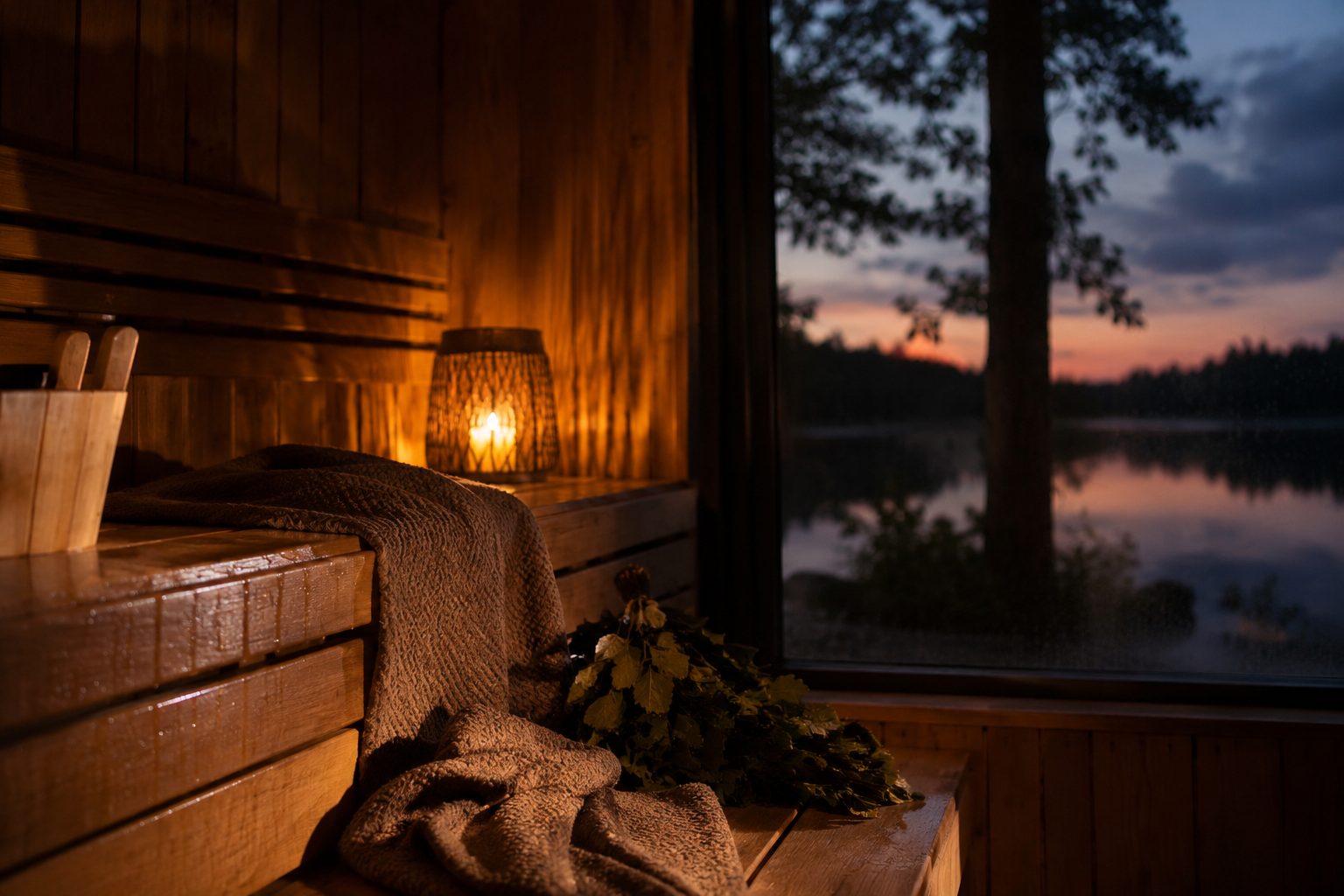
In Finland, Sweden and much of the Nordic region, the evening sauna is a fixture of the day. Families take it after dinner, friends gather in it on Friday nights, and many people simply end the workday there. It is a ritual with a clear purpose: it marks the line between the busy part of the day and the rest of it. For many people it also seems to make sleep come easier, and there is some real physiology behind that.
Heat puts load on the heart and circulation. If you have a heart condition or low blood pressure, or you are pregnant, check with a doctor before making evening sessions a habit. Anyone should leave the sauna if they feel dizzy or unwell.
Why it became a wind-down ritual
A sauna asks you to do almost nothing. There is no screen, no conversation you have to keep up, and no way to multitask in 80°C heat. That forced pause is part of the appeal. Heat and quiet draw you out of “alert” mode, your muscles let go, and the body gets a clear signal that the day is over. Some of the benefit is the heat, and some is simply the stillness.
The physiology: warming up to cool down
Sleep starts more easily when your core body temperature falls. Heat exposure sets up that fall in a roundabout way. The sauna raises your core temperature, and your skin vessels widen to release the heat. In the hour or two afterward, your body cools below where it began. That drop is a natural cue for sleepiness.
Research on warm baths points the same way: people who soak one to two hours before bed tend to fall asleep faster. Saunas seem to work on similar principles, but sauna-specific sleep studies are fewer and less conclusive. That is probably why it helps some people and not everyone. Individual heat tolerance, timing and routine all play a part.
Getting the timing and routine right
The same physiology explains why the details matter. Aim to finish one to two hours before bed. Finish too late and your core temperature is still elevated when you lie down, which works against you.
Does the sauna type matter?
Less than people think. Traditional Finnish saunas, infrared cabins and steam rooms all produce the same basic effect: heat, relaxation, and a temperature drop afterward. A traditional sauna with löyly, the burst of steam from water on the stones, is intense and sensory. Infrared runs cooler and may suit people who find high heat tiring. Choose the one you will use in a calm, unhurried way, because the ritual matters as much as the equipment.
Home sauna vs. one an hour away
A home sauna keeps the whole routine inside your evening. You step out, cool down, drink water and head to bed with nothing interrupting the wind-down.
A sauna an hour away changes the flow. The drive home can cancel the calm, especially if you are drowsy and it is dark, and the travel pushes your bedtime later. The fix is to go earlier. Treat the visit as an early-evening outing, book a slot that ends well before you want to be asleep, and let the trip home be part of the cooldown. A far-away sauna suits a weekend ritual better than a weeknight habit.