Shower first
Rinse off and dry yourself well. Dry skin warms more evenly and keeps the room fresh for everyone.
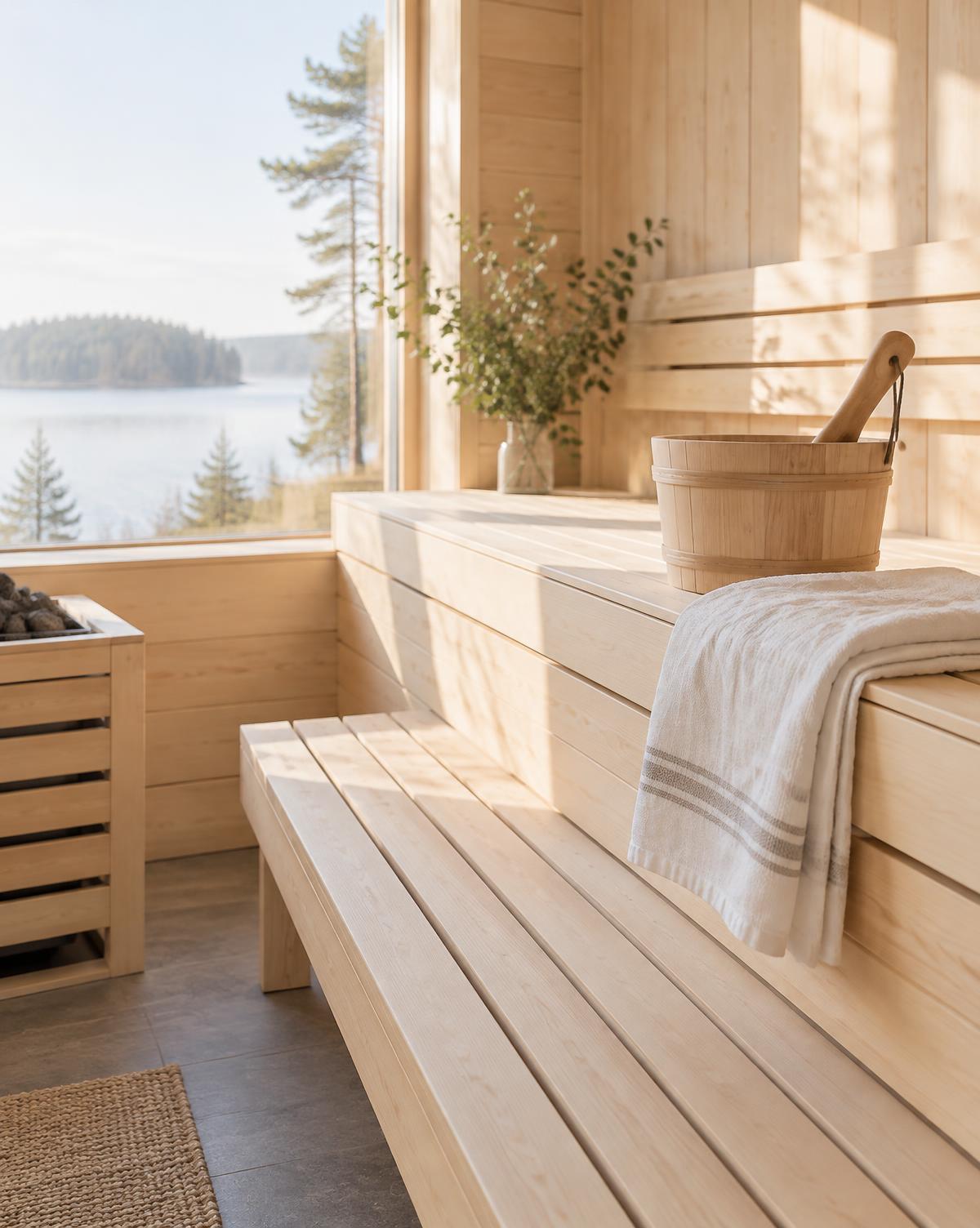
Guide 01 — Begin gently
There is no performance in sauna. Your first visit is simply about noticing the heat, listening to your body and leaving feeling better than when you arrived.
01 — Step by step
Rinse off and dry yourself well. Dry skin warms more evenly and keeps the room fresh for everyone.
Start on a lower bench for 5–8 minutes. Heat rises, so the top bench is for later.
Step outside, shower or sit somewhere cool until your breathing feels easy again.
Two or three gentle rounds are plenty. Stop whenever it stops feeling good.
02 — A small, honest kit
03 — Make it your ritual
Heat, compared
Saunas differ in heat and humidity, so they feel different on the body. These are potential benefits from research and tradition.
80–100°C · dry, 10–20% humidity
Heart rate rises to around 100–150 BPM, similar to light exercise. Regular use is linked in Finnish studies with lower cardiovascular risk and deep relaxation afterwards.
70–90°C · bursts of steam on the stones
Water on the stones makes the heat feel stronger without raising the thermometer. Many find it calming and good for loosening tired muscles.
60–80°C · soft, humid heat
Gentler, even heat that lets you stay longer. Valued mostly for stress relief, sleep and a slow, social ritual.
40–50°C · close to 100% humidity
Moist air can feel soothing for the nose and throat and softens the skin. Lower temperature, but the humidity still raises your heart rate.
45–60°C · warms the body directly
A milder option for beginners or those who find hot air hard to breathe. Small studies suggest muscle relaxation and recovery; evidence is still limited.
Next guide
Follow along
Session announcements, seasonal cold dips and daily life in the warmth.