For beginners
Why we cool down between rounds
The pause outside is not an interruption. It is half of the ritual.
3 October 2026
If you're new to sauna, the cooling down part is usually what feels most intimidating. Stepping from intense heat into cold air or water raises more questions than the heat itself ever does. The good news is that none of it requires bravery you don't already have. It just takes starting gently.
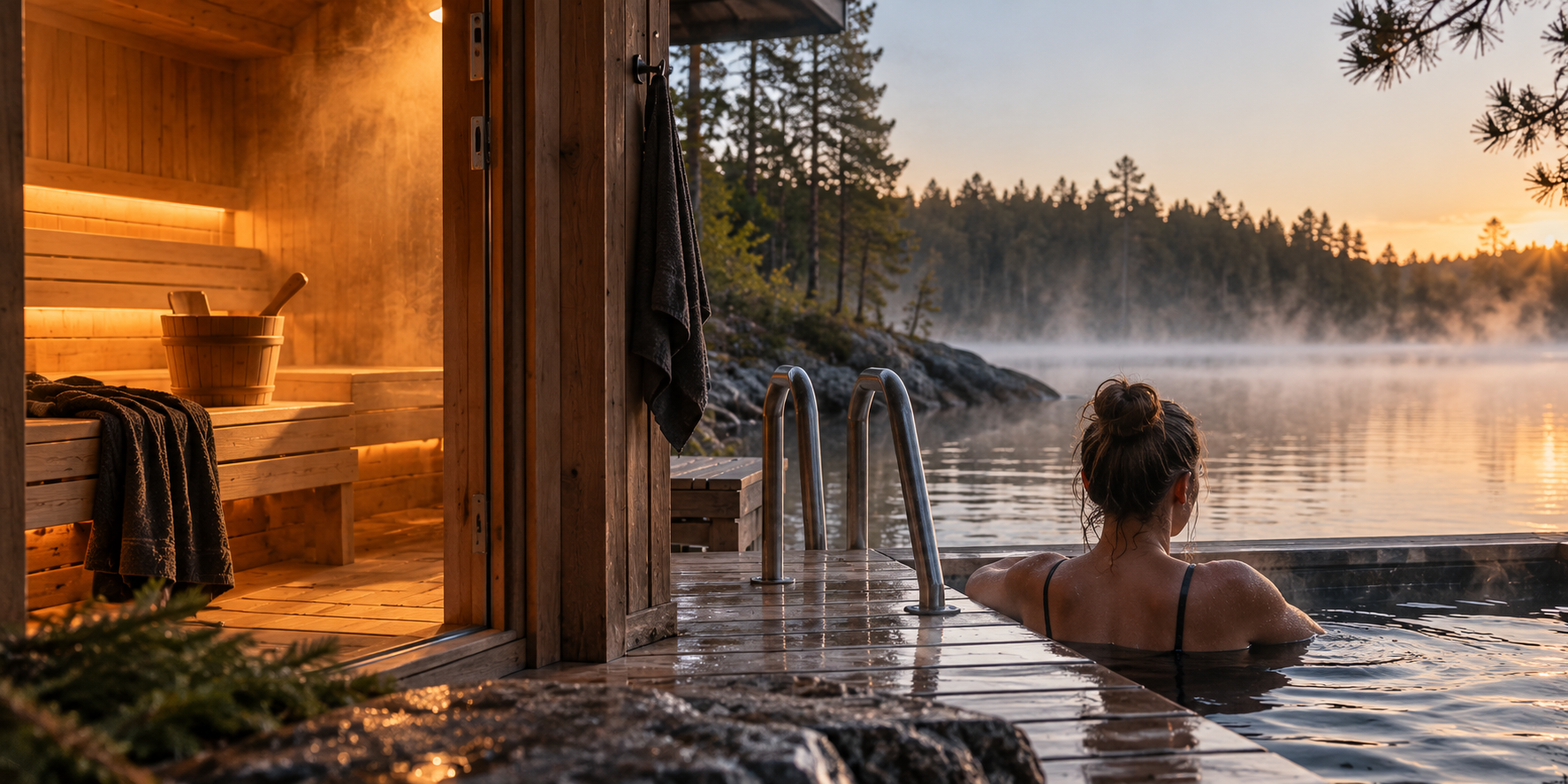
The first thing worth knowing is that you don't need cold water at all. The benefit of cooling down comes from the contrast in temperature, not from suffering through something icy. Standing in fresh, cool air (a friskluftsbad) gives you most of the same effects as a cold plunge, just more gradually. A cold shower sits somewhere in the middle, and a full plunge is the most intense option. None of these is more "correct" than the others; they're simply different intensities of the same idea, and the right one for you is whichever feels restorative rather than punishing.
For a first session, keep things short and gentle. Eight to twelve minutes in the heat is plenty. There's no reward for lasting longer, and the moment the heat starts to feel like strain rather than something pleasant is your cue to step out. Cool down with the softest option available: stand or sit in fresh air for a few minutes, breathing slowly through your nose. Skip the plunge entirely for now. Once that gentler cool down feels familiar, you can experiment with a cold shower and, later, a plunge, if more intensity appeals to you.
Give the cool down real time rather than rushing back into the heat. A few minutes is usually enough for your heart rate to settle and your breathing to slow. You'll know you're ready to go back in when the intense flush of heat in your skin has faded and your breathing feels calm and steady again; you don't need to wait until you actually feel cold. As for how many rounds to do, two or three is a good target for beginners. Even one full round (heat, then a proper cool-down) is already a complete, worthwhile session, so there's no pressure to build up to more.
A few physical sensations along the way are normal and not something to worry about. A light shiver after cooling down simply means your body is generating heat as it readjusts. It's only a concern if it becomes intense or uncontrollable, or if you feel numb or unwell, in which case the answer is to warm back up gently rather than push through. Feeling briefly dizzy when you stand up to leave the sauna is also common. It's usually just a drop in blood pressure from your dilated blood vessels, and standing up slowly, pausing before you walk, and drinking enough water throughout your session all help. Whether to dry off before returning to the heat is purely a comfort preference. Some people find lingering water feels colder near the heat, others don't mind it. Plain water between rounds is enough to stay ahead of the fluid you lose through sweating.
One caveat worth taking seriously: for most healthy people, moving between hot and cold is well tolerated and has been practiced for centuries without issue. But it does place a real, temporary demand on your cardiovascular system, which is exactly why easing in matters more than intensity. If you have a heart condition, high blood pressure, or any concern about how your body handles sudden temperature change, this is genuinely a case where a conversation with a doctor matters more than any general guidance here.
And if cold water simply isn't for you, that's fine. The whole point of this practice is that it should feel good. If a step feels like something to endure rather than something to enjoy, it's worth adjusting rather than pushing through.