Swedish sauna culture
The sacred silence. How quiet time elevates the sauna ritual
Enter the sauna the way you would enter a church-like space. Quietly.
19 September 2026
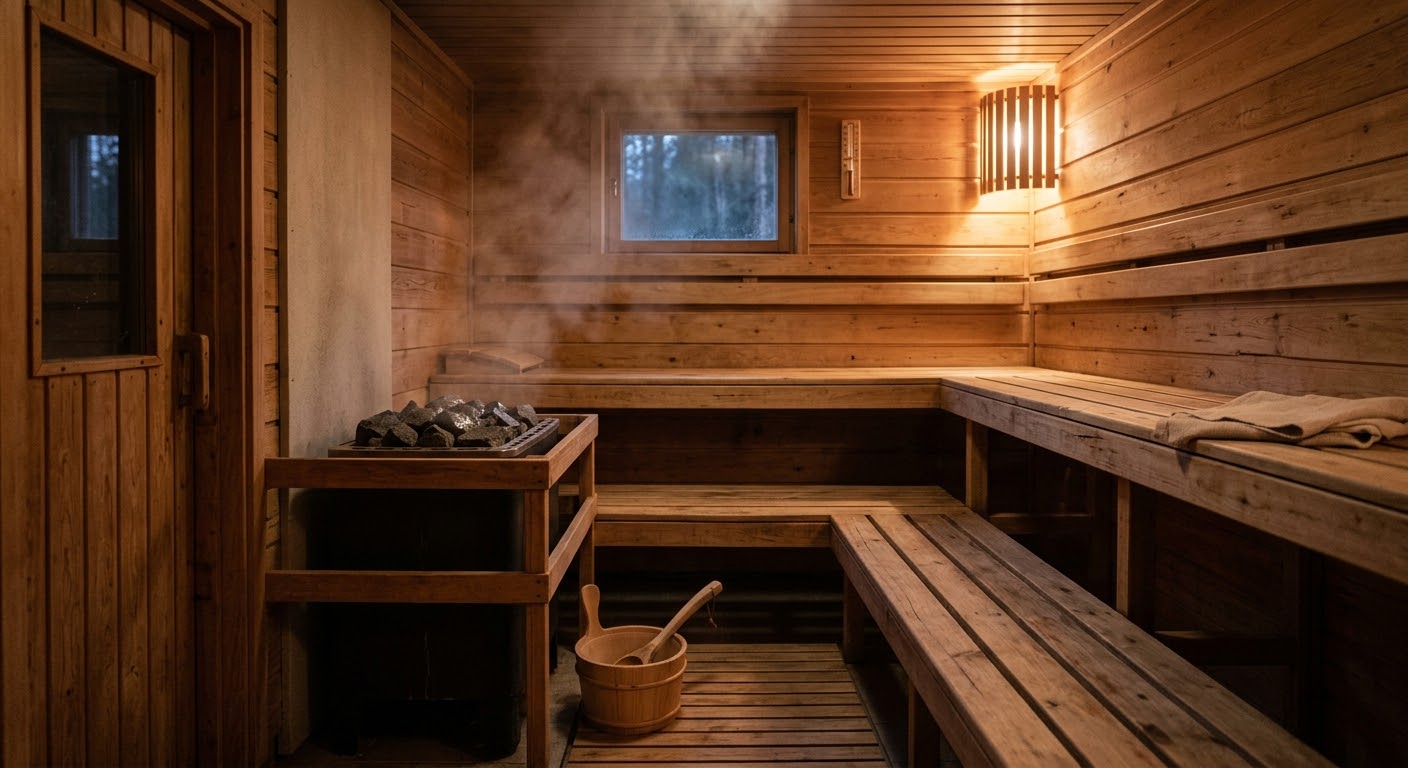
Step into a sauna and something shifts before the heat even reaches your skin. Voices drop. Shoulders lower. Conversation thins out, and then it stops. Nobody announces a rule. The room simply asks for quiet, and most of us give it. This silence isn't an accident of the setting. It's one of the oldest and most important parts of the sauna ritual, and it may be the ingredient that turns a hot room into something closer to a reset for the mind.
In Nordic sauna culture, silence has long been the default. In Finland, where sauna is woven into daily life, it is often described as a place to behave as you would in a church. Calm, respectful, unhurried. Swedish bastu culture shares that spirit. It's a place for slowing down, not for performing. The heat plays its part, too. When the air is hot enough to make you aware of every breath, small talk starts to feel like effort. What's left is presence. The crackle of the stove, the hiss when water meets stones, the sound of your own breathing.
That hiss is where the art of listening begins. The Finnish word löyly refers to the steam that rises when water hits hot stones, and also to the feeling that follows, the wave of heat that rolls over you. Ask anyone who loves sauna and they'll tell you that löyly is best received in silence. The moment is brief. The water hits the stones, the room exhales, and heat settles over you. If you're mid sentence, you miss it. If you're quiet, you feel the whole arc: the sound, the rush, the slow release. Silence sharpens your attention, and attention is what turns a hot room into a ritual.
It also explains why quiet changes the experience so deeply. Most of our days are spent surrounded by input (notifications, conversations, background noise), a mind that never quite stops composing the next reply. The sauna is one of the few places where none of that is welcome, and the silence there is not empty. It gives the mind room to settle. Restless thoughts often lose momentum on their own when there's no conversation to feed them. The body becomes easier to notice, too. Your heartbeat, your breath, the warmth spreading through your muscles all seem louder when everything else goes quiet. Time stretches, so ten minutes in a still sauna can feel fuller than an hour of scrolling. And because nothing is competing for your attention, emotions sometimes surface gently. Some people cry, some laugh, and some simply feel lighter. None of this needs to be mystical. It's what tends to happen when you stop talking and start noticing.
This silence works in two very different ways, depending on who you share it with. Alone, it's a form of meditation without the effort. You don't need a technique, only the heat and your own attention. With others, it becomes something rarer. Shared quiet. Sitting beside friends, family, or even strangers without needing to fill the space is a quiet kind of closeness. Many people say some of their best conversations happen after the sauna, on the porch or by the water, once the silence has softened everything. The stillness isn't the opposite of connection. It's what makes the connection feel unforced.
You don't need a perfect setting to practice this. It begins before you even enter, by leaving your phone outside. Even a phone tucked in a bag keeps a small part of your attention elsewhere. Treat the door as a threshold, close it softly, and settle in without commentary. Once you're seated, let your breath lead. Breathe in slowly through your nose and out through your mouth, and let the pace of the room become your pace. If you're with others, let the pauses stay pauses. Comfortable quiet is a sign the sauna is working, and there's no need to rescue it.
The silence doesn't have to end when you step out of the heat. A cold plunge, a shower, or a rest on a bench belongs to the same ritual, and it's often where the deepest calm arrives. Save the talking for afterward, when warm tea, a shared meal, and easy conversation make a natural second half. One practical note: silence is never a reason to push past your limits. Stay hydrated, keep sessions to a length that feels good, and step out whenever your body asks. The quiet helps you hear it.
If you're looking for a sauna that supports this kind of experience, notice how a place treats silence. Does it have quiet hours or a stated etiquette? Are there separate spaces for social and silent use? Is there a calm place to rest afterward? The best saunas don't just heat the room. They protect the atmosphere.
It's easy to think of a sauna as a list of features. Temperature, wood type, views, cold plunge. But what people remember most is often the feeling. The stillness, the warmth, the sense of having set something down. The next time you step into the heat, try leaving the words at the door. Sit, breathe, wait for the steam. You may find that the sacred part of the sauna was never the heat at all, but the silence it makes possible.